What Is a Consent Artefact Under the DPDP Act?
What Is a Consent Artefact Under the DPDP Act?
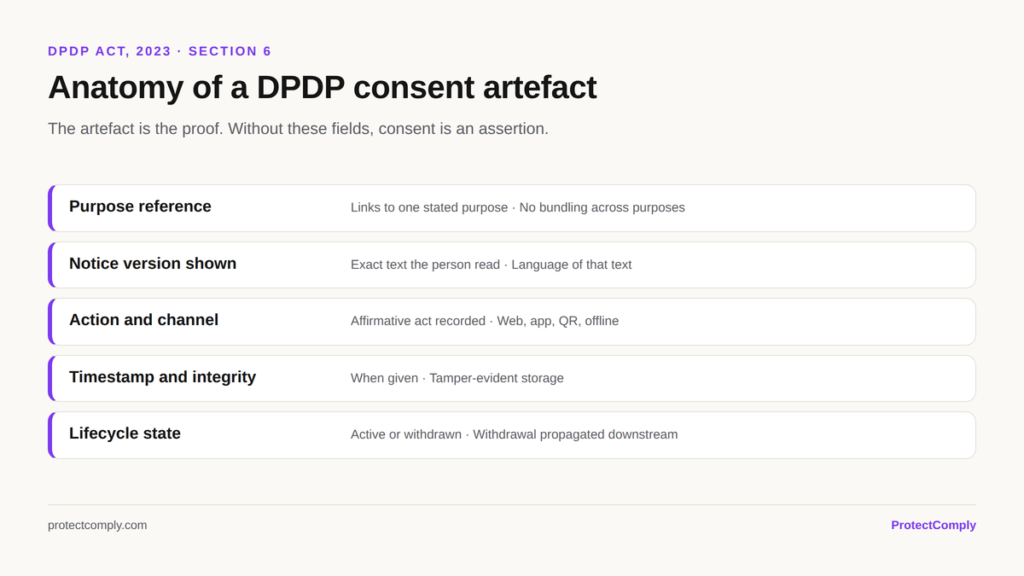
A consent artefact is a machine-readable, verifiable record of a consent: who gave it, to whom, for which data, for which purpose, and for how long.

Think of it as the receipt for consent — one that software can read, verify, and act on, rather than a checkbox log a human has to interpret.
Where the Idea Comes From
The consent artefact pattern was popularised in India by DEPA — the Data Empowerment and Protection Architecture — where it powers the Account Aggregator ecosystem in financial services. Every data-sharing event is authorised by a signed, structured artefact instead of an ad-hoc permission.
The DPDP Act brings the same philosophy to all personal data. It defines the Consent Manager in §6 read with §2(g): an entity registered with the Data Protection Board that lets a Data Principal give, manage, review, and withdraw consent through an accessible, transparent, interoperable platform.
Interoperable is the key word — and interoperability between consent systems is exactly what the artefact format exists to provide.
What a Consent Artefact Typically Contains
- The identity of the Data Principal (or a pseudonymous identifier)
- The Data Fiduciary requesting the data
- The specific data items covered
- The declared purpose, mapped to the notice given under §5
- Validity period and expiry
- A signature or integrity check so the record is tamper-evident
Why It Matters for Your Compliance Programme
Section 6 requires consent that is free, specific, informed, unconditional and unambiguous — and as easy to withdraw as it was to give. When an inquiry or audit comes, “we had a checkbox” is a claim. An artefact is evidence.
Structured consent records also make withdrawal propagation practical: revoke the artefact, and every downstream system keyed to it knows to stop processing.
How ProtectComply Handles It
ProtectComply records every consent as a structured, immutable, purpose-linked record — and speaks DEPA Rule 4 consent-as-a-service interoperability for ecosystems that exchange artefacts.
Related reading: what a Consent Manager is under the DPDP Act · DPDP consent management: what Indian companies must build · the best DPDP platforms in India.